7. Physical Processes
7.1. Introduction
7.1. Introduction
- This chapter of the Array Environmental Impact Assessment (EIA) Report presents the assessment of the likely significant effects (LSE1) (as per the EIA Regulations) on physical processes as a result of the Ossian Array which is the subject of this application (hereafter referred to as “the Array”). Specifically, this chapter assesses the LSE1 of the Array on physical processes during the construction, operation and maintenance, and decommissioning phases.
- Likely Significant Effect is a term used in both the EIA Regulations and the Habitat Regulations. Reference to LSE1 in this Array EIA Report refers to LSE1 as used by the EIA Regulations. The accompanying Report to Inform Appropriate Assessment (RIAA) (Ossian OWFL, 2024) for the Array uses the term as defined by the Habitats Regulations Appraisal (HRA) Regulations (LSE2).
- This chapter summarises information contained within volume 3, appendix 7.1.
7.2. Purpose of the Chapter
7.2. Purpose of the Chapter
- The Array EIA Report provides the Scottish Ministers, statutory and non-statutory stakeholders with adequate information to determine the LSE1 of the Array on the receiving environment. This is further outlined in volume 1, chapter 1.
- The purpose of this physical processes Array EIA Report chapter is to:
- present the existing environmental baseline established from desk studies, site-specific surveys, and consultation with stakeholders;
- identify any assumptions and limitations encountered in compiling the environmental information;
- present the environmental impacts on physical processes arising from the Array and reach a conclusion on the LSE1 on physical processes, based on the information gathered and the analysis and assessments undertaken; and
- highlight any necessary monitoring and/or mitigation measures which are recommended to prevent, minimise, reduce or offset the likely significant adverse environmental effects of the Array on physical processes.
7.3. Study Area
7.3. Study Area
- Figure 7.1 Open ▸ illustrates the physical processes study area (Zone of Influence (ZoI)) for the Array which encompasses the:
- proposed Array area (i.e. the area in which the wind turbines will be located); and
- seabed areas that may be influenced by changes to physical processes due to the Array, based on the outputs of the physical processes assessment which will encompass a wider domain. This is the area of one spring tidal excursion, which is defined as the distance suspended sediment is transported prior to being carried back on the returning tide.
- From published Admiralty data (United Kingdom Hydrographic Office (UKHO), 2023), a dominant current direction of north/south is evident and a mean spring tidal excursion of 8 km has been determined for these directions in the physical processes study area, reducing to 4 km for the east/west tidal regime. Figure 7.1 Open ▸ shows the physical processes study area relative to the nearest designated area relevant to physical processes, Firth of Forth Banks Complex Marine Protected Area (MPA), 25 km to the west of the site boundary.
Figure 7.1: Physical Processes Study Area
7.4. Policy and Legislative Context
7.4. Policy and Legislative Context
- Volume 1, chapter 2 of the Array EIA Report presents the policy and legislation of relevance to renewable energy infrastructure. Policy specifically in relation to physical processes is contained in the Sectoral Marine Plan (SMP) for Offshore Wind Energy (Scottish Government, 2020), the Scottish National Marine Plan (NMP) (Scottish Government, 2015) and the United Kingdom (UK) Marine Policy Statement (MPS) (HM Government, 2011). Table 7.1 Open ▸ presents a summary of the policy provisions relevant to physical processes, with other relevant policy provisions set out in Table 7.2 Open ▸ and Table 7.3 Open ▸ .
- Further detail is presented in volume 1, chapter 2.
Table 7.1: Summary of SMP for Offshore Wind Energy Relevant to Physical Processes (Scottish Government, 2020)[1]
Table 7.2: Summary of the Scottish NMP Relevant to Physical Processes (Scottish Government, 2015)
Table 7.3: Summary of UK MPS Relevant to Physical Processes (HM Government, 2011)
7.5. Consultation
7.5. Consultation
- Table 7.4 Open ▸ presents a summary of the key issues raised during consultation activities undertaken to date specific to physical processes for the Array and in the Ossian Array Scoping Opinion (Marine Directorate - Licensing Operations Team (MD-LOT), 2023) along with how these have these have been considered in the development of this physical processes Array EIA Report chapter. Further detail is presented within volume 1, chapter 5.
Table 7.4: Summary of Issues Raised During Consultation and Scoping Opinion Representations Relevant to Physical Processes
7.6. Methodology to Inform Baseline
7.6. Methodology to Inform Baseline
- A range of existing studies and datasets has been reviewed and analysed to inform this physical processes baseline, in line with the process set out in the Array Scoping Report (Ossian OWFL, 2023). In addition, consultation with MD-LOT, MD-SEDD and NatureScot has been carried out to aid the collection of baseline information. Scoping responses did not specify any requirement for physical processes modelling of the baseline, however it was agreed with stakeholders, following review of the Array EIA Scoping Report, that the baseline assessment should also include water column processes. It was also agreed that four impact pathways should be scoped in and dealt with qualitatively, negating the need for physical processes numerical modelling of the baseline.
- A qualitative approach has therefore been adopted, involving a detailed desktop review to gather baseline information on physical processes within the physical processes study area.
7.6.1. Desktop Study
7.6.1. Desktop Study
- Information on physical processes within the physical processes study area was collected through a detailed desktop review of existing studies and datasets which are summarised in Table 7.5 Open ▸ .
- Both the literature review of the reports and review of available data were used to characterise the baseline. The physical processes technical report (volume 3, appendix 7.1) includes full details of the analysis undertaken to develop the physical processes baseline.
Table 7.5: Summary of Key Desktop Reports
7.6.2. Identification of Designated Sites
7.6.2. Identification of Designated Sites
7.6.3. Site-Specific Surveys
7.6.3. Site-Specific Surveys
Table 7.6: Summary of Site-Specific Survey Data
7.7. Baseline Environment
7.7. Baseline Environment
7.7.1. Overview of Baseline Environment
7.7.1. Overview of Baseline Environment
- The following sections provide a summary of the physical processes baseline environment. The physical processes technical report, volume 3, appendix 7.1, includes full details of the analysis undertaken to develop the physical processes baseline and information on hydrodynamics, wind and waves, as well as seabed morphology and suspended sediments.
Bathymetry
- Site-specific geophysical data collected by Ocean Infinity in 2022 (volume 3, appendix 8.1, annex A) were supplemented with Digital Terrain Model (DTM) data available from MEDIN (MEDIN, 2023) to describe the bathymetry within the physical processes study area, where water depths range between 59 m and 154 m relative to Lowest Astronomical Tide (LAT). An average depth within the physical processes study area was determined as circa 74.5 m, with the shallowest depths to the north-west and deepest to the south of the site boundary.
- The bathymetry of the physical processes study area consists of gentle slopes and generally deepens towards the east. These gentle seafloor gradients range from 0° to 5°, with numerous localised steeper areas observed within ripple areas and flanks of rippled scour depressions. Larger sediment features generally run in a direction from north to south, while smaller sediment features run in a more east to west direction (volume 3, appendix 8.1, annex A).
Wind and waves
- The baseline wind conditions within the physical processes study area were assessed by examining a long term modelled datapoint extracted from the CFSR dataset by the NCEP, part of NOAA. This central point (56°41.6911’N, 0°25.3224’W) located within the physical processes study area demonstrates that the dominant wind direction is from the south-west, with mean hourly wind speeds, 10 m above the sea surface, of up to 31.5 m/s during the 1979 to 2023 period. Further statistical analysis has shown that a 1 in 10 year return period wind speed from the directional sector 225° to 255° is estimated to be 28.97 m/s, increasing to 34.39 m/s for a 1 in 200 year wind speed from that sector. These data were corroborated by site specific measurements undertaken by a Floating Light Detection and Ranging (FLiDAR) campaign, alongside the metocean measurements by Partrac (volume 3, appendix 7.1, annex A). The FLiDAR data provided a range of horizontal wind speeds at two locations for a series of heights above mean sea level (MSL). The twelve month dataset, captured from August 2022 to August 2023, also showed a dominance from the south-west and southerly sectors, with wind speeds commenserate with the NOAA data for a 1 in 1 year return period. Furthermore, the Partrac data have shown a circa 18% reduction in horizontal wind speed from a height of 150 m above MSL to 12 m above MSL at both survey locations. The data available at 12 m above sea level were the closest available measured data to the water surface, however, there will be a further reduction in horizontal wind speeds between 12 m above MSL and the water surface.
- Waves in the northern North Sea, where the Array will be located, can be generated either by local winds or from remote wind systems (swell waves) (Royal HaskoningDHV, 2012b). To inform the baseline wave regime within the physical processes study area, data from three metocean buoys within the site boundary were analysed. The buoys were deployed over a 12 month period commencing August 2022, recording maximum significant wave heights (Hs) up to 8.96 m and peak wave periods (Tp) up to 20 s towards the south of the site boundary in November 2022. Dominant wave directions were shown to be from the north and north-north-east. ECMWF wave model data also showed a dominant northerly sector within the physical processes study area, with northerly wave heights up to 8.2 m and peak wave peiords up to 24 s modelled during the 2000 to 2021 period.
Tidal currents and elevation
- To inform the baseline tidal regime within the physical processes study area, data from three site-specific metocean buoys were analysed, which were deployed within the site boundary from August 2022 for a period of 12 months. Maximum current speeds were recorded in July at each location, with maximum depth-averaged current speeds during the autumn or winter months when the water column was well mixed. Currents were dominated by semidiurnal tidal flow and surface currents were strongly rectilinear.
- The mean spring tidal range varied from 2.41 m in the north of the site boundary to 2.34 m in the south, with currents typically flowing in a south-south-westerly direction near the seabed and a southerly direction near the surface. Mean current speeds of 0.21 m/s and 0.27 m/s were captured near the seabed and surface respectively at Site 1 in the north of the site boundary, with smaller mean differences at Site 2 (central) and Site 3 (in the south) between the surface and seabed values. The maximum recorded current speed occurred at Site 1 in July 2023, where a value of 0.91 m/s was reached near the surface, whilst the maximum depth-averaged speed of 0.68 m/s occurred in October 2022 at Site 1. Maximum depth averaged current speeds of 0.66 m/s and 0.62 m/s occurred in January 2023 at Sites 2 and 3, respectively.
- The Atlas of UK Marine Renewable Energy Resources showed mean spring current speeds (in the absence of any meteorological influences) of up to 0.55 m/s in the north of the physical processes study area and 0.4 m/s in the south (ABPmer, 2008). Tidal levels at the standard ports of Leith and Montrose show a MHWS ranging from 4.9 m to 5.6 m, whilst a Mean Low Water Springs (MLWS) is 0.8 m at both ports (UKHO, 2023).
Water column processes
- North Sea salinity and temperature data are available from the ‘Climatology of Surface and Near-bed Temperature and Salinity on the North-West European Continental Shelf for 1971-2000’ (Berx and Hughes, 2009); these data include nearbed and surface salinity and temperature monthly mean values within the physical processes study area. The datapoints available within the physical processes study area shows that the largest surface and seabed salinity and temperature differences occur in August, with May and June also showing some of the larger differences. For example, at a point towards the centre of physical processes study area (56° 39.0000’ N, 0° 25.0020’ W), salinity differences between the surface and the seabed are 0.085 Practical Salinity Units (PSU) for August, whilst in April the difference is 0.016 PSU. Salinity values at the seabed are reported to be less than 0.1 PSU different from the salinity values at the surface for all months and across the physical processes study area, therefore the physical processes study area can be considered as being subject to weak seasonal stratification, with evidence of relatively thorough mixing, even in the summer months.
- The site-specific metocean survey campaign by Partrac between 2022 and 2023 confirmed patterns expected with seasonal stratification within the site boundary. Through the summer months, temperatures slowly increase, however most of the heat is retained in the upper stratified layer. Current shear was observed within the site boundary with strongest currents in the upper mixed layer during the summer months. Maximum nearbed temperatures were recorded in October, when the surface waters that were subject to increased temperatures in the summer months have become fully mixed with the deeper layers. This mixing occurs relatively quickly, with the seabed temperatures then cooling slowly until March, when temperatures reach a minimum.
- The month of August was identified as the most critical for seasonal stratification within the Berx and Hughes (2009) Climatology dataset. Further data have been extracted from the SSW-RS (Barton et al., 2022) which provides a 27 year reanalysis dataset (1993 to 2019) of the Scottish Shelf Model (De Dominicis et al., 2018). Conditions within the physical processes study area were reviewed under both calm and storm conditions during August, within a sample year of 2016.
- During both the sample storm and calm conditions, the salinity data shows that the stratified layer is within the top 30 m of the water column, or circa 35% of the depth, implying that the effects of wind on the weak stratification in this area are very low. Surface layers for both calm and storm conditions reflect very similar salinity patterns, underpinning the limited effect of the wind on the water column mixing processes in the physical processes study area. With regard to temperature, both storm and calm conditions portray a similar pattern to the salinity data. The differences between surface and seabed salinity within the physical processes study area are less than 0.1 PSU, therefore any stratification even under the most extreme conditions is classified as weak.
Geology
- The physical processes study area is part of a complex glacial system, in which the subsequent sedimentary depositions in the Quaternary sediments are affected by the alternating glacial and interglacial stages that affected the northern hemisphere. The ground model was defined from geophysical data collected in 2022 during site-specific surveys by Ocean Infinity (volume 3, appendix 8.1, annex A). A total of five geological units were identified, with a total of five interpreted horizons, aided in interpretation through the delineation of localised geological features (volume 3, appendix 8.1, annex A).
- Offshore marine bedrock data (scale 1:250,000) provided by the BGS illustrate that the physical processes study area is dominated by chalk and palaeocene rocks (mudstone, sandstone and lignite) (Marine Directorate, 2017).
- The 2022 Ocean Infinity surveys (volume 3, appendix 8.1, annex A) confirmed the geological morphology within the site boundary is varied and includes the following features:
- megaripples;
- sand waves;
- boulders (primarily in the north-west);
- recent marine soft sediment deposits; and
- deep channel structures (down to 60 m) with sedimentary infill (south-eastern corner).
Seabed substrate
- Particle Size Analysis (PSA) conducted for the site-specific benthic studies showed that sediment composition had limited variation across the site boundary (volume 3, appendix 8.1, annex A). Sand comprised the dominant sediment fraction with mean content of 86.4%, while mud content was low overall with a mean content of 9.1% (comprising 8.0% silt and 1.1% clay). The gravel content was the lowest with a mean, but variable, content of 4.5% (volume 3, appendix 8.1, annex A).
- The recent geophysical surveys identified that the seabed within the site boundary consists primarily of sand, with some areas of gravel and occasional diamicton (poorly sorted mixed sediments). Gravel areas are more frequent in the north-west, with occasional diamicton also observed in this area. The seabed within the site boundary is relatively flat, with a general slope towards the east. The presence of megaripples and sand waves across the site boundary indicates mobile sediments. The presence of furrows indicates sedimental erosion. Furthermore, the furrows are the most recent mobile sediment feature as they were observed to cut into the megaripples and sand waves (volume 3, appendix 8.1, annex A).
- Occasional boulder fields (five to 20 boulders within a maximum area of 2,500 m2) and numerous boulder fields (≥ 20 boulders within a maximum area of 2,500 m2) are distributed across the site boundary, most frequently in the west, within areas of gravel and diamicton (volume 3, appendix 8.1, annex A).
Suspended sediment and sediment transport
- The Centre for Environment Fisheries and Aquaculture Science (Cefas) Climatology Report presents the spatial distribution of average non-algal SPM for the majority of the United Kingdom Continental Shelf (UKCS) (Cefas, 2016). These data estimate that the average SPM associated with the physical processes study area was between 0 mg/l and 1 mg/l between 1998 and 2015, with higher levels during the winter months (up to 3 mg/l in January and December) than the remainder of the year (Cefas, 2016). Baseline SPM conditions within the physical processes study area can be described as very low in the context of the UKCS, where plumes associated with large rivers which discharge into, for example, the Thames Estuary or the Bristol Channel show mean values of SPM above 30 mg/l (Cefas, 2016).
- Site-specific surveys conducted for the Seagreen 1 Offshore Wind Farm in March and June 2011 recorded low Total Suspended Solids (TSS) across four sampling stations, with TSS levels of <5 mg/l in most samples and a maximum value of 18 mg/l (Royal HaskoningDHV, 2012b). The survey area is noted to be situated in shallower water than the physical processes study area.
- Wave-driven currents during seasonal storms can temporarily elevate SSCs and can cause levels to rise significantly, which then gradually decrease to baseline conditions following storm events. These effects are less significant in deeper waters; therefore, it can be inferred that the TSS will be lower within the physical processes study area than at the Seagreen 1 Offshore Wind Farm and therefore likely below a maximum value of 10 mg/l during a winter storm.
- Low sediment transport rates due to low residual current speeds were reported within the Berwick Bank Offshore Wind Farm array area (SSER, 2022). Modelled residual currents were minimal, in the order of 0.008 m/s in a south-south-west direction of approximately 190°, with net sediment transport limited to below 0.003 m3/d/m during a small proportion of the tidal cycle (SSER, 2022). It is anticipated that low rates of sediment transport would exist across the physical processes study area, to the similar tidal regime and wave climate.
7.7.2. Designated Sites
7.7.2. Designated Sites
- A screening of designated sites in the vicinity of the Array has been carried out and has identified that there were no designated sites relevant to physical processes.
- The closest site designated with physical processes qualifying interest features is the Firth of Forth Banks Complex MPA, which is located a minimum of 20 km to the west of the physical processes study area. Relevant to physical processes, this site is designated for offshore subtidal sands, shelf banks and mounds and moraines representative of the Wee Bankie Key Geodiversity Area. However, as outlined in the Array EIA Scoping Report (Ossian OWFL, 2023), the distance of this MPA from the physical processes study area allows it to be screened out from the assessment, as there is no potential for impacts due to the construction, operation and maintenance or decommissioning of the Array to reach beyond the physical processes study area.
7.7.3. Future Baseline Scenario
7.7.3. Future Baseline Scenario
- The EIA Regulations require that a “a description of the relevant aspects of the current state of the environment (baseline scenario) and an outline of the likely evolution thereof without implementation of the project as far as natural changes from the baseline scenario can be assessed with reasonable effort, on the basis of the availability of environmental information and scientific knowledge” is included within the Array EIA Report.
- If the Array does not come forward, the ‘without development’ future baseline conditions are described within this section.
- The baseline environment for physical processes is not static and will exhibit a degree of natural change over time. Such changes will occur with or without the Array due to natural variability. Future baseline conditions would be altered by climate change resulting in sea level rise and potential increased storminess (Met Office, 2018) (refer to volume 3, appendix 17.2 for further detail). This is unlikely to have the effect of significantly altering tidal patterns and sediment transport regimes offshore within the physical processes study area. The return period of the wave climates would be altered (e.g. what is defined as a 1 in 50 year event may become a 1 in 20 year event) as deeper water may allow larger waves to develop. There is, however, a notable degree of uncertainty regarding how future climate change will impact prevailing wave climates in the North Sea and beyond. Seasonal stratification may also increase in magnitude and be prevalent through more months of the year, due to a rise in ocean temperatures. This may result in increased impacts to tidal fronts, should infrastructure be developed above or below the sea surface.
7.7.4. Data Limitations and Assumptions
7.7.4. Data Limitations and Assumptions
- Following stakeholder consultation, a wide range of reports and datasets have been collated for the purpose of establishing the baseline environment within the physical processes study area. All sources are listed under section 7.6.1 and volume 3, appendix 7.1. Although some physical processes are complex and inter-related, there are a considerable amount of data available. There are limitations associated with any modelled datasets analysed in the interpretation of the baseline, for example tidal, wind, wave, salinity, temperature and suspended sediment data, however as far as practicable, the most current and reliable information has been assessed and underpinned by comparison with measured data where available. Limitations in modelled datasets may include uncertainties or inaccuracies within input data and assumptions and approximations within the modelling in representing physical reality. Any uncertainties within statistical methods used, for example extreme value analysis have been included as confidence limits within volume 3, appendix 7.1. Data limitations and tolerances for site-specific survey campaigns within the site boundary are discussed within the relevant reports (volume 3, appendix 8.1, annex A; volume 3, appendix 7.1, annex A).
- Due to the quantity, coverage and quality of available data covering the physical processes study area, it is considered that the data employed are sufficient for the purposes of the assessment of effects presented. Any limitations within the datasets and reports are not considered to have any implications for the conclusions of the assessment.
7.8. Key Parameters for Assessment
7.8. Key Parameters for Assessment
7.8.1. Maximum Design Scenario
7.8.1. Maximum Design Scenario
- The Maximum Design Scenarios (MDS) identified in Table 7.7 Open ▸ are those expected to have the potential to result in the greatest effect on an identified receptor or receptor group. These scenarios have been selected from the details provided in volume 1, chapter 3 of the Array EIA Report. Effects of greater adverse significance are not predicted to arise should any other development scenario, based on details within the Project Description (volume 1, chapter 3) (e.g. different infrastructure layout), to that assessed here, be taken forward in the final design scheme.
- The results of the physical processes assessment will be used to support and inform the following Array EIA Report chapters:
- volume 2, chapter 8: Benthic Subtidal Ecology;
- volume 2, chapter 9: Fish and Shellfish Ecology;
- volume 2, chapter 10: Marine Mammals;
- volume 2, chapter 15: Infrastructure and Other Users; and
- volume 2, chapter 17: Climatic Effects.
Table 7.7: Maximum Design Scenario Considered for Each Potential Impact as Part of the Assessment of LSE1 on Physical Processes
7.8.2. Impacts Scoped Out of the Assessment
7.8.2. Impacts Scoped Out of the Assessment
- The physical processes pre-Scoping workshop (refer to Table 7.4 Open ▸ ) was used to facilitate stakeholder engagement on topics to be scoped out of the assessment.
- On the basis of the baseline environment and the Project Description outlined in volume 1, chapter 3 of the Array EIA Report, a number of impacts were proposed to be scoped out of the assessment for physical processes. This was either agreed with key stakeholders through consultation as discussed in volume 1, chapter 5, or otherwise, the impact was proposed to be scoped out in the Array EIA Scoping Report (Ossian OWFL, 2023) and no concerns were raised by key consultees within the Ossian Array Scoping Opinion (MD-LOT, 2023).
- These impacts are outlined, together with a justification for scoping them out, in Table 7.8 Open ▸ .
Table 7.8: Impacts Scoped Out of the Assessment for Physical Processes (Tick Confirms the Impact is Scoped Out)
7.9. Methodology for Assessment of Effects
7.9. Methodology for Assessment of Effects
7.9.1. Overview
7.9.1. Overview
- guidelines for the use of metocean data through the life cycle of a marine renewable energy development (Cooper et al., 2008);
- guidance on Environmental Impact Statement (EIS) and Natura Impact Statement (NIS) Preparation for Offshore Renewable Energy Projects (Barnes, 2017);
- guidance on Marine Baseline Ecological Assessments and Monitoring Activities for Offshore Renewable Energy Projects Parts 1 and 2 (Scally et al., 2018);
- guidance on Best Practice for Marine and Coastal Physical Processes Baseline Survey and Monitoring Requirements to inform EIA of Major Development Projects (Brooks et al., 2018);
- Offshore Wind Marine Environmental Assessments: Best Practice Advice for Evidence and Data Standards (Natural England, 2022); and
- nature considerations and environmental best practice for subsea cables in English inshore and UK offshore waters (Natural England and JNCC, 2022).
- In addition, the physical processes impact assessment has considered the overarching policy and legislation as described in volume 1, chapter 2 of this Array EIA Report.
7.9.2. Criteria for Assessment of Effects
7.9.2. Criteria for Assessment of Effects
- When determining the significance of effects, a two stage process is used which involves defining the magnitude of the potential impacts and the sensitivity of the receptors. This section describes the criteria applied in this chapter to assign values to the magnitude of potential impacts and the sensitivity of the receptors. The terms used to define magnitude and sensitivity are based on those which are described in further detail in volume 1, chapter 6 of the Array EIA Report.
- The criteria for defining magnitude in this chapter are outlined in Table 7.9 Open ▸ . Each assessment considered the spatial extent, duration, frequency and reversibility of impact when determining magnitude which are outlined within the magnitude section of each impact assessment (e.g. a duration of hours or days would be considered for most receptors to be of short term duration, which is likely to result in a low magnitude of impact).
Table 7.9: Definition of Terms Relating to the Magnitude of an Impact
- The criteria for defining sensitivity in this chapter are outlined in Table 7.10 Open ▸ .
Table 7.10: Definition of Terms Relating to the Sensitivity of the Receptor
- The magnitude of the impact and the sensitivity of the receptor are combined when determining the significance of the effect upon physical processes. The particular method employed for this assessment is presented in Table 7.11 Open ▸ .
- Where a range is suggested for the significance of effect, for example, minor to moderate, it is possible that this may span the significance threshold. The technical specialist’s professional judgement was applied to determine which outcome defined the most likely effect, which took in to account the sensitivity of the receptor and the magnitude of impact. Where professional judgement was applied to quantify final significance from a range, the assessment has set out the factors that result in the final assessment of significance. These factors may include the likelihood that an effect will occur, data certainty and relevant information about the wider environmental context.
- For the purposes of this assessment:
- a level of residual effect of moderate or more was considered a ‘significant’ effect in terms of the EIA Regulations; and
- a level of residual effect of minor or less was considered ‘not significant’ in terms of the EIA Regulations.
- Effects of moderate significance or above are therefore considered important in the decision-making process, whilst effects of minor significance or less warrant little, if any, weight in the decision-making process.
Table 7.11: Matrix Used for the Assessment of the Significance of the Effect
7.10. Measures Adopted as Part of the Array
7.10. Measures Adopted as Part of the Array
- As part of the Array design process, a number of designed in measures have been proposed to reduce the potential for impacts on physical processes (see Table 7.12 Open ▸ ). They are considered inherently part of the design of the Array and, as there is a commitment to implementing these measures, they have been considered in the assessment presented in section 7.11 (i.e. the determination of magnitude and therefore significance assumes implementation of these measures). These designed in measures are considered standard industry practice for this type of development.
Table 7.12: Designed In Measures Adopted as Part of the Array
7.11. Assessment of Significance
7.11. Assessment of Significance
- Table 7.7 Open ▸ summarises the potential impacts arising from the construction, operation and maintenance and decommissioning phases of the Array, as well as the MDS against which each impact has been assessed. An assessment of the likely significance of the effects of the Array on the physical processes receptors caused by each identified impact is given below.
- An increase in SSCs and associated deposition may arise during the operation and maintenance phase of the Array, which may impact on the sediment transport regime within the physical processes study area. The potential of an increase in SSCs may arise as a result of mooring lines or cables making contact with and moving on the seabed, disturbing seabed materials and causing scouring and increased SSCs within the water column, which may have direct impacts to physical processes receptors.
Operation and maintenance phase
Magnitude of impact
- The majority of mooring lines on the seabed during operation and maintenance will remain largely static with movement predominately around the touchdown point. The greatest potential for the increase in SSCs due to mooring lines will be from catenary moorings which have the greatest length of mooring lines in contact with the seabed. The MDS is considered to be the foundations with the greatest length of mooring line on the seabed per foundation, rather than over the site boundary as a whole, as the effects are considered to be very localised, with no interactions between adjacent foundations. Therefore, semi-submersible foundations with up to nine catenary mooring lines have been considered. Movement on the seabed by inter-array cables will be limited to a small section between the touch down point and the point where the cable becomes static, resulting in minor increases to SSCs in the vicinity of the touchdown point only.
- The mooring line radius for the MDS is 700 m, with a touchdown distance of between 25 m and 150 m from the foundation, and overall length of 750 m. During operation approximately 680 m of the caternary mooring line will be in contact with the seabed which amounts to 6,120 m per foundation. The tidal range at the Ossian site is less than 4 m, therefore it is not anticipated that tidal movements will result in substantial horizontal and vertical movements. As a result, the mooring lines are not considered to notably increase the SSCs under standard operating conditions.
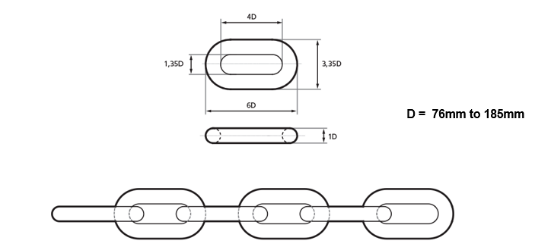
- Under storm conditions, the dynamic interaction between the mooring lines and the seabed will increase with intensity and direction of the storm. Horizontal movement of the floating foundations may result in the lifting of the mooring lines located on the windward side of the wind turbine, as tension on these mooring lines increases. Mooring lines on the leeward side would experience the opposite effect, whereby the length of mooring line in contact with the bed increases as they slacken, up to a maximum of 710 m for some mooring lines in the most extreme storm conditions. The length where disturbance is likely to occur will be less, as this will be greater closer to the touchdown point and negligible towards the anchor point. Furthermore, the dimensions of the mooring lines are considered to be small, with a chain thickness of 185 mm, and horizontal diameter of 620 mm, which will limit the volumes of seabed material they have the potential to disturb, even if they were to become completely embedded.
- With regard to inter-array cables, the total length of the dynamic inter-array cables will be 116 km with a maximum external cable diameter of 300 mm. Movement of the inter-array cables may be reduced through the use of buoyancy modules and clump weights (subject to engineering design) thus limiting movement on the seabed to a very small proportion of the total dynamic cable length between the touchdown point and where it transitions to a static cable. Static inter-array and interconnector cables on the seabed will be buried or fixed with cable protection where target burial depths cannot be achieved. Thus the potential disturbance area is restricted to small areas in the vicinity of up to two dynamic cable touchdown points per wind turbine. Increased SSCs would therefore be spatially limited, smaller and adjacent to any disturbance resulting from the mooring lines, of which there are up to nine per floating foundation.
- The spacing between the 130 floating foundations under assessment is at a minimum 1.4 km, which is large enough for any impacts to SSCs to be considered as isolated, considering the low current speeds and sediment transport rates in the physical processes study area. Any dynamic interactions between the seabed and mooring lines or dynamic cables will likely be experienced similarly at adjacent foundations under tidal and storm conditions, with the foundations moving in the same direction and orientated the same way as their neighbouring foundations. Thus storm conditions will not impact upon minimum foundation spacing and seabed disturbance areas from mooring lines are considered sufficiently far apart to be isolated even under storm conditions.
- Variation in seabed composition is limited across the Array, with sand accounting for most of the seabed substrate, with small amounts of mud and gravel (paragraph 32). Disturbed materials are more likely to move along the seabed, rather than becoming fully suspended in the water column and due to the low nearbed current speeds, will not be transported for any significant distance before being re-deposited on the seabed. The baseline dominant current direction within the site boundary is to the south or south-south-west, with dominant wind directions also from the south-west. Therefore, disturbed sediments from mooring lines and cabling are likely to move towards the north-east, however, there may also be some effect from littoral currents produced by the dominant wave direction from the north.
- As discussed within the physical processes technical report (volume 3, appendix 7.1), movement would only occur during a small proportion of the tidal cycle, due to the reduction in current speeds, therefore material will settle within a few minutes to hours, depending on tidal state and be deposited close to the area of disturbance. Therefore, the potential for changes to the overall sediment transport regime in the physical processes study area is unlikely, particularly considering the small quantities of material with potential to be disturbed. There is a low potential to directly impact physical features within the site boundary from the increase in SSCs, however due to the isolated volumes of potential materials to be disturbed and the low sediment transport rates in the area, the impact can be considered to be relevant within the Array only. This direct impact would occur intermittently for short durations of the tidal cycle and would be greatest during storm conditions. Baseline TSSs were assessed as likely below 10 mg/l during a winter storm, and any increase as a result of the mooring lines and cabling are not expected to exceed this. Seabed scouring from movement of mooring lines and cabling on the bed during storm events will be limited due to the ongoing sediment transport processes.
- The impact is predicted to be of local spatial extent, short term duration, intermittent and high reversibility. It is predicted that the impact will affect the receptor directly. The magnitude is therefore considered to be low.
Sensitivity of the receptor
- As there are no designated sites within the physical processes study area, the receptor to the impact of increases in SSCs and sediment transport is the low value seabed morphology within the physical processes study area. As discussed within section 7.7.1 and in more detail in the physical processes technical report (volume 3, appendix 7.1), the seabed is located in deep waters with an average depth within the site boundary of 74.5 m. The bathymetry consists of gentle seafloor gradients, with some localised steeper ripple areas. Megaripples, sand waves, boulders, soft sediment deposits and deep channel structures with sedimentary infill are all present within the site boundary. The presence of megaripples and sand waves across the site boundary indicates mobile sediments, although sediment transport rates are low in the area. Sediment composition was relatively consistent across the site boundary and was dominated by sand, with diamicton and gravel deposits.
- Any increase in SSCs and associated deposition will include native material only, and although comprises predominantly mobile sand material, the low rates of sediment transport, will ensure it is redeposited close by after a short period of suspension, thus not impacting significantly on seabed morphology. Any significant changes to the seabed morphology will not recover immediately, due to the low rates of sediment transport, however the evidence of mobile sediments implies any impacts will be fully recoverable after some time.
- The seabed morphology is deemed to be of low vulnerability, medium recoverability and low value. The sensitivity of the receptor is therefore considered to be low.
Significance of the effect
- Changes to SSCs and associated deposition and sediment transport due to operation and maintenance activities do not extend to any designated areas, therefore the significance of the effect is discussed in terms of the effect on low value seabed morphology within the physical processes study area.
- The magnitude of the increase in SSCs and associated deposition is low, anticipated to occur only during extreme storm conditions. Low sediment transport rates will ensure any disturbed native materials are redeposited locally after a short period of suspension, thus not impacting significantly on seabed morphology or the overall sediment transport regime.
- Any changes to the seabed morphology as a result of the Array may not recover immediately, due to the low rates of sediment transport, although it is likely that baseline sediment transport will be increased during storm conditions and changes to seabed morphology will be dominated by the storm conditions rather than by the impact from the Array. Nonetheless, the evidence of mobile sediments within the baseline survey (volume 3, appendix 8.1, annex A) implies any impacts will be fully recoverable after some time.
- Potential increased SSCs as a result of seabed preparation, foundation installation and cable installation were assessed through a detailed modelling study as part of the nearby Berwick Bank Offshore Wind Farm EIA and showed only negligible to minor adverse significance (SSER, 2022). The volumes of sediments assessed were much greater than anticipated for any sediments disturbed by the mooring lines or cabling of the Array, for example 500 mg/l peak plume concentrations during Berwick Bank Offshore Wind Farm cable installation. Even though the operational impact of the Array has potential to occur over a greater period of time than the construction period of Berwick Bank Offshore Wind Farm, the impacts are considered to be temporally isolated, as any increase in SSCs would occur intermittently for short durations of the tidal cycle, before returning to ambient values. Therefore it can be inferred that there should be no significant effects for this impact.
- Furthermore, the Suspended Sediment Climatologies report (Cefas, 2016), describes two test cases of the large wind farms Walney and Greater Gabbard, located in the Irish and North Seas, respectively. It was noted that at the spatial scale of the sites, no significant effect on non-algal SPM was detected whilst using monthly averages (Cefas, 2016).
- Overall, the magnitude of the impact is deemed to be low and the sensitivity of the receptor is considered to be low. The effect will, therefore, be of negligible adverse significance, which is not significant in EIA terms.
Secondary mitigation and residual effect
- No physical processes mitigation is considered necessary because the likely effect in the absence of mitigation is not significant in EIA terms.
Impacts to the Wind Field due to the Presence of Infrastructure
- There is potential for the presence of infrastructure within the Array to alter the wind field, potentially impacting on mixing and stratification. The MDS is considered to be the greatest number of wind turbines within the Array, as that will produce the biggest impact over the physical processes study area. This impact is relevant to the operation and maintenance phase of the Array and may cause direct impacts to receptors.
Operation and maintenance phase
Magnitude of impact
- Wind turbines operate by converting kinetic energy from the wind into electricity with a generator. This process results in less kinetic energy in the atmosphere and a localised reduction in wind speed behind the wind turbine rotor. This reduction in wind speed is known as a “wake.”
- A recent study funded by the European Union Horizon 2020 project, made use of satellite-borne synthetic aperture radar (SAR) to conclude that this reduction in downstream wind speeds was in the region of 2% to 10% at 10 m above MSL with average wakes persisting for 20 km to 40 km (Owda and Badger, 2022). This study was based upon offshore wind farms or clusters of offshore wind farms with between 80 and 240 wind turbines in operation (Owda and Badger, 2022). A further study using SAR on two large offshore wind farms (circa 80 wind turbines) showed a decrease in wind speed in the lee of the wind turbines, with a velocity deficit of 8% to 9% immediately downstream of the wind turbines, recovering to within 2% over a distance of 5 km to 20 km (Christiansen and Hasager, 2005). This was validated using results from wake modelling and in situ measurements (Christiansen and Hasager, 2005).
- As would be expected, these wakes vary in both intensity and dimensions, and are highly dependent on a variety of factors, such as ambient wind speed, wind turbine size and layout (i.e. direction and spacing) of the wind turbine array (Barthelmie et al. 2010). Typically, reductions in wind speed increase with the number of wind turbines within an offshore wind farm up to a certain threshold (Christiansen and Hasager, 2005) and wakes will persist further in more stable atmospheric conditions (Platis et al., 2018). In the majority of weather situations, where unstable conditions are present, wind turbine wakes are typically localised within the offshore wind farm (Platis et al., 2018). This is due to the atmospheric turbulence aiding the recovery of the wake from vertical layers (Platis et al., 2018).
- The MDS for assessment included up to 265 floating wind turbines, with hub height at 148 m above LAT and a maximum rotor diameter of 236 m. Based on the information in paragraph 82, it is assumed that there will be a reduction in downstream wind speeds by up to 10% at 10 m above MSL due to the large number of wind turbines within the MDS for the Array, however designed in measures such as wind turbine spacing and wake modelling will in reality likely yield a lesser reduction at this altitude. Furthermore, the percentage reduction in wind speed will reduce further at the water surface. Wake distances are anticipated to extend beyond the Array due to the offshore location and stable atmospheric conditions, however, as outlined in paragraph 83, wake effects beyond 5 km to 20 km are considered to be very limited. This is even more applicable at the sea surface, where the effect of turbulence is greater.
- The impact is predicted to be of local spatial extent, long term duration, continuous and high reversibility. It is predicted that the impact will affect the receptor directly. The magnitude is therefore considered to be medium.
Sensitivity of the receptor
- Due to the offshore, exposed location of the Array, any notable changes to the wind field will not affect the overall wind regime within the physical processes study area significantly, and will be localised, with only limited changes persisting beyond the Array. Any changes to the wind field would be fully recoverable by the removal of the infrastructure.
- The wind field is deemed to be of low vulnerability and highly recoverable. The sensitivity of the receptor is therefore considered to be negligible.
Significance of the effect
- Changes to the wind field due to the presence of infrastructure during the operation and maintenance phase of the Array have been estimated to be less than 10% of baseline wind speed at 10 m above MSL, with the greatest reduction in wind speeds likely towards the centre of the Array due to wake interactions. Only limited wake effects are anticipated to be evident beyond the Array.
- Overall, the magnitude of the impact is deemed to be medium and the sensitivity of the receptor is considered to be negligible. The effect will therefore be of minor adverse significance, which is not significant in EIA terms.
Secondary mitigation and residual effect
- No physical processes mitigation is considered necessary because the likely effect in the absence of mitigation is not significant in EIA terms.
Impacts to Seasonal Stratification due to the Presence of Infrastructure
- Under certain circumstances, interactions of the OSP foundations, wind turbines and their foundations and associated infrastructure (including cable protection, scour protection and anchor mooring lines) on the wind field, wave climate and tidal regime could alter seasonal stratification (where water density varies with depth) within the water column. This impact is relevant to the operation and maintenance phase of the Array and may cause direct impacts to receptors.
Operation and maintenance phase
Magnitude of impact
- Downstream reductions in the wind field and the knock-on effect on waves and tides, along with the impact on waves and tides due to the presence of infrastructure within the water column may alter seasonal stratification. Therefore, it was considered that the largest surface obstruction and volume within the water column has the potential to cause the greatest impact to stratification. This is produced by 265 semi-submersible wind turbines, with a surface obstruction of 3,789,500 m2 with a corresponding draft of 25 m.
- As the wind turbines will be based on floating foundations, with only the OSPs using fixed foundations, and situated in relatively deep water, the infrastructure within the water column and on the seabed will likely be smaller and with less impedance than that of fixed foundation projects, such as Seagreen 1 Offshore Wind Farm (Seagreen, 2012) and Berwick Bank Offshore Wind Farm, for which computational modelling predicted no significant impacts (SSER, 2022).
- A recent study by Dorrell et al. (2022) suggests potential impacts arising from various offshore wind turbines upon seasonal stratification (including both fixed and floating infrastructures). A non-trivial effect on mixing may be caused by semi-submersible floating infrastructure, or other designs with small drafts, by intersecting the thermocline (Dorrell et al., 2022). Baroclinic effects will likely enhance drag by up to two orders of magnitude in the case of semi-submersible structures, whereby mixing will occur via shed lee waves, internal waves, blockage effects and wake-wake interactions (Dorrell et al., 2022). This means that water flowing past the semi-submersible structures may generate wakes that can double the natural turbulent mixing.
- Surveys on two non-operational, fixed foundation offshore wind farms in the North Sea were undertaken, showing a consistent weakening of stratification near the centre of the wind farms, which extended into the surrounding area by circa half a tidal excursion (Floeter et al., 2017). However, results were inconclusive as to the cause of the effect being due to the infrastructure in the water column. Furthermore, measurements of stratified wake from an offshore monopile at the DanTysk Offshore Wind Farm, showed a reduction in the potential energy anomaly by up to 65% and demonstrated that turbulence generated by monopiles reduces stratification (Schultze et al., 2020). There is however limited survey information available on how floating foundations may impact on stratification.
- The proposed technology for the Array will be smaller and with less impedance on prevailing flow and wave climate than the infrastructure relating to fixed foundations or floating technology considered in Dorrell et al. (2022), Floeter et al. (2017) and Schultze et al. (2020). A recent review by Farr et al. (2021) stated that floating offshore wind farms in deeper water are expected to be less disruptive to ocean currents and waves (and hence seasonal stratification) than wind turbines with fixed foundations and in shallower water. In terms of the presence of the Array floating foundations with a surface obstruction of 3,789,500 m2 over the Array, this is only 0.44% of the total Array area of 858 km2. The 25 m draft of these structures in the water column is much less than for the fixed foundations discussed in paragraph 96 and would equate to a water column obstruction volume of circa 861,250 m3 over the Array, in addition to the small number of OSPs. Unlike fixed foundations, this wind turbine foundation draft would lie entirely within the upper stratified layer, as discussed within paragraph 28. Within the Project Description (volume 1, chapter 3), the maximum potential draft is described as 40 m, which has potential to penetrate the thermocline. However, as the surface obstruction over the Array is much smaller than that presented by the option with 265 wind turbines, it was not selected as the MDS for impact on seasonal stratification.
- With regard to the effect of winds on waves and currents and the effect on mixing and seasonal stratification, assuming a maximum of circa 10% reduction in wind speeds at 10 m above the sea surface, as discussed within paragraph 85, this will be further reduced at the water surface, as demonstrated by the baseline description of reduction in horizontal wind speeds between hub height and sea level (paragraph 20). Studies in the North Sea have shown wind speed reductions at the surface due to these wakes in the order of 0.1 m/s to 0.5 m/s, depending on a range of factors including but not limited to the season and density of wind turbines (Akhtar et al., 2021; Christiansen et al., 2022).
- Christiansen et al. (2022) noted that “as a result of constantly changing wind directions, pronounced wake patterns disappear when averaging over time”. In context of prevailing physical processes at the site boundary, speed reductions of 0.1 m/s to 0.5 m/s within the surface layer would be considered to be of low magnitude, particularly given that these patterns would likely disappear when averaging over time owing to naturally varying wind speeds and directions across the site boundary. Thus, the limited reduction in wind speed due to the presence of the infrastructure is not considered to have a marked effect on waves and currents within the Array, which are predominantly determined from other factors, such as swell (as evidenced from the long period waves in the baseline environment) and the large scale tidal regime. Furthermore, from baseline evidence, as summarised within paragraph 28 and detailed in the Technical Report (volume 3, appendix 7.1), it has been shown that the impact of wind on seasonal stratification through the water column at the Array is negligible.
- If any impact exists, it is likely that this will involve a reduction to stratification due to the presence of the foundations within the upper stratified layer of the water column. This would likely be countered by any potential increase to stratification caused by a decrease in wind speeds, as the two impacts would likely have opposing effects. Furthermore, any increase in seasonal stratification due to climate change would counteract stratification reduction due to water column infrastructure.
- The impact is predicted to be of local spatial extent, long term duration, intermittent and high reversibility. It is predicted that the impact will affect the receptor directly. The magnitude is therefore considered to be medium.
Sensitivity of the receptor
- The receptor to changes to seasonal stratification due to the presence of infrastructure is considered to be the tidal front in the physical processes study area, as the baseline identified the physical processes study area as being subject to weak seasonal stratification. Frontal positions are predominantly controlled by tidal mixing, however any changes to seasonal stratification would be fully recoverable by the removal of the infrastructure.
- The tidal front is deemed to be of low vulnerability and highly recoverable. The sensitivity of the receptor is therefore considered to be negligible.
Significance of the effect
- Previous modelling studies and offshore wind developments in the North Sea, based on fixed wind turbine foundations, have demonstrated that there are no significant impacts on waves and tides (Dudgeon, 2009; Arcus, 2012; Repsol and EDP Renewables, 2013; MORL, 2014). Furthermore, the Cefas (2005) study has demonstrated that there are no post-construction impacts, and the MMO (2014) review concluded that current and wake monitoring was included in licences for early offshore wind farms (such as Burbo Bank Offshore Wind Farm) but had been removed from later licences due to insignificant effects. Subsequently, this evidence outlines that there will be very limited impacts on wind, waves and tidal flows, thus in turn, stratification from these pathways.
- Furthermore, effects to stratification fronts were assessed to be negligible and of minor significance due to insignificant changes to the tidal regime at Beatrice Offshore Wind Farm and Moray East Offshore Wind Farm, which are situated within the Moray Firth (Arcus, 2012; MORL, 2014).
- A further study by Carpenter et al. (2016) concluded that there is expected to be very little impact on large-scale stratification at the current offshore wind farm capacity in the North Sea. This study provided a comparison of the estimated timescales of mixing and advection for water bodies with offshore wind farms against baseline stratification (Carpenter et al., 2016). Although further research is required on the impact on large scale stratification due to the increase in leased capacity in the North Sea, the impact of the Array is predicted to be of local spatial extent, which is supported by the conclusion of the study by Carpenter et al. (2016).
- Due to the scale of the Array and the designed in measure of sufficient spacing between wind turbines, the impact will be insignificant in terms of the effect on waves and tides over the Array as a whole and will not be expected to change the wave or tidal regime in the physical processes study area. Therefore, there is unlikely to be any knock-on impact to stratification, with the semi-submersible structures likely to lie completely within the stratified layer, without penetration of the thermocline.
- With regard to wind effects on seasonal stratification, a reduction in wind wake which occurs primarily at hub height is anticipated to have very limited effect on stratification though the water column. Any increase to stratification would likely be countered by a reduction to stratification due to the presence of infrastructure within the water column. Any changes to seasonal stratification are considered to be highly localised and will not result in widescale changes to the tidal front.
- Overall, the magnitude of the impact is deemed to be medium and the sensitivity of the receptor is considered to be negligible. The effect will therefore be of minor adverse significance, which is not significant in EIA terms.
Secondary mitigation and residual effect
- No physical processes mitigation is considered necessary because the likely effect in the absence of mitigation is not significant in EIA terms.
7.12. Cumulative Effects Assessment
7.12. Cumulative Effects Assessment
7.12.1. Methodology
7.12.1. Methodology
- The CEA assesses the LSE1 associated with the Array together with other relevant plans, projects and activities. Cumulative effects are defined as the combined effect of the Array in combination with the effects from a number of different projects, on the same receptor or resource. Further details on CEA methodology are provided in volume 1, chapter 6.
- The projects and plans selected as relevant to the CEA presented within this chapter are based upon the results of a screening exercise (see volume 3, appendix 6.4 of the Array EIA Report). Volume 3, appendix 6.4 further provides information regarding how information pertaining to other plans and projects is gained and applied to the assessment. Each project or plan has been considered on a case-by-case basis for screening in or out of this chapter's assessment based upon data confidence, impact-receptor pathways and the spatial/temporal scales involved.
- In undertaking the CEA for the Array, it should be noted that other projects and plans under consideration will have differing potential for proceeding to an operational stage and hence a differing potential to ultimately contribute to a cumulative impact alongside the Array. Therefore, a tiered approach has been adopted which provides a framework for placing relative weight upon the potential for each project/plan to be included in the CEA to ultimately be realised, based upon the project/plan’s current stage of maturity and certainty in the projects’ parameters. The tiered approach which will be utilised within the Array CEA employs the following Tiers:
- tier 1 – Array and Proposed offshore export corridor(s) and Proposed onshore transmission infrastructure and all plans/projects which became operational since baseline characterisation, those under construction, and those with consent and submitted but not yet determined;
- tier 2 – All plans/projects assessed under Tier 1, plus those projects with a Scoping Report; and
- tier 3 – All plans/projects assessed under Tier 2, which are reasonably foreseeable, plus those projects likely to come forward where an Agreement for Lease (AfL) has been granted.
- The specific projects scoped into the CEA for physical processes, are outlined in Table 7.13 Open ▸ . The projects scoped in fall within the physical processes CEA study area, which is defined by two tidal excursions (16 km ZoI from the Array). One mean spring tidal excursion of 8 km was defined for the north/south orientation, reducing to 4 km for currents moving to the east and west, as discussed within section 7.3 for the physical processes study area. Therefore, the physical processes CEA study area is defined by a distance of 16 km to the north and south of the site boundary and 8 km to the east and west. This will allow the interaction of sediment plumes from the Array and surrounding projects to be considered.
- Some of the potential impacts considered within the Array alone assessment are specific to a particular phase of development (e.g. construction, operation and maintenance or decommissioning). Where the potential for cumulative effects with other plans or projects only have potential to occur where there is spatial or temporal overlap with the Array during certain phases of development, impacts associated with a certain phase may be omitted from further consideration where no plans or projects have been identified that have the potential for cumulative effects during this period.
Table 7.13: List of Other Projects and Plans Considered within the CEA for Physical Processes
7.12.2. Maximum Design Scenario
7.12.2. Maximum Design Scenario
- The maximum design scenarios identified in Table 7.7 Open ▸ have been selected as those having the potential to result in the greatest effect on an identified receptor or receptor group. The cumulative effects presented and assessed in this section have been selected from the details provided in volume 1, chapter 3 of the Array EIA Report as well as the information available on other projects and plans (see volume 3, appendix 6.4), to inform a ‘maximum design scenario’. Effects of greater adverse significance are not predicted to arise should any other development scenario, based on details within the Project Description (volume 1, chapter 3) (e.g. different wind turbine layout), to that assessed here, be taken forward in the final design scheme.
Table 7.14: Maximum Design Scenario Considered for Each Impact as part of the Assessment of Likely Significant Cumulative Effects on Physical Processes
7.12.3. Cumulative Effects Assessment
7.12.3. Cumulative Effects Assessment
- An assessment of the likely significance of the cumulative effects of the Array upon physical processes receptors arising from each identified impact is given below.
Increase in Suspended Sediment Concentrations and associated Deposition and Sediment Transport due to operation and maintenance activities
- Increased SSCs and associated deposition on physical features may arise during the operation and maintenance of the Array, which may impact on the sediment transport regime within the physical processes study area. The potential of an increase in SSCs may arise as a result of mooring lines or cables making contact with and moving on the seabed, disturbing seabed materials and causing scouring and increased SSCs within the water column. Should the other projects cited take place concurrently with the Array operation and maintenance, there is potential for cumulative increased turbidity levels and increased impact on sediment transport.
Tier 1
Operation and maintenance phase
Magnitude of impact
- The magnitude of the increase in SSCs and associated deposition arising during the operation and maintenance of the Array, including the potential to impact on the sediment transport regime has been assessed as low for the Array alone, as described in section 7.11. The assessment was undertaken for mooring lines and cabling disturbing seabed sediments, with mooring lines noted as the primary potential impact pathway.
- The operation and maintenance phase of the Array coincides with the operation and maintenance phase of the Proposed offshore export cable corridor(s). Transmission maintenance activities such as cable repair and reburial may result in increased SSCs, however these activities would be of limited spatial extent and frequency. It is unlikely that cable repair and reburial activities will be undertaken during storm conditions, when the SSCs arising from the Array mooring lines will be greatest, as assessed in the MDS for the Array. As discussed under section 7.11, disturbed materials are more likely to move along the seabed, rather than becoming fully suspended in the water column and over only a short duration of the tidal cycle will be transported a short distance before being re-deposited on the seabed. Therefore, the changes to the overall sediment transport regime in the physical processes study area is unlikely.
- The cumulative impact is predicted to be of local spatial extent, short term duration, intermittent and high reversibility. It is predicted that the impact will affect the receptor directly. The magnitude is therefore considered to be low.
Sensitivity of receptor
- As discussed under section 7.11, the sensitivity of the seabed morphology within the physical processes study area is of low value, comprised mainly of mobile sand materials, with low sediment transport rates. Materials will be redeposited close by after a short period of suspension, thus not impacting significantly on seabed morphology. There will be no interaction of sediment plumes between the Array and the Proposed offshore export cable corridor(s), as they will be advected on the same tidal current. Even if this was the case, any material will settle locally and the seabed morphology in the physical processes study area should be able to accommodate any additional impacts. Impacts are likely to be fully recoverable after some time.
- The seabed morphology is deemed to be of low vulnerability, medium recoverability and low value. The sensitivity of the receptor is therefore, considered to be low.
Significance of effect
- Overall, the magnitude of the cumulative effect is deemed to be low and the sensitivity of the receptor is considered to be low. The cumulative effect will therefore be of negligible adverse significance, which is not significant in EIA terms.
Further mitigation and residual effect
- No physical processes mitigation is considered necessary because the likely effect in the absence of further mitigation (beyond the designed in measures outlined in section 7.10) is not significant in EIA terms.
Tier 2
Operation and maintenance phase
Magnitude of impact
- One Tier 2 project has been identified with potential cumulative effects associated with this impact: Morven Offshore Wind Farm ( Table 7.14 Open ▸ ). This project has been assessed in terms of operation and maintenance during the Array operation and maintenance period. Maintenance activities applicable to this impact for the Morven Offshore Wind Farm are cable repair and reburial (Morven Offshore Wind Limited, 2023). Cable repair and reburial may result in local and short term increases in suspended sediments, which are unlikely to occur simultaneously with the MDS for the Array for this impact. There may be potential impacts to sediment transport due to the presence of the Morven Offshore Wind Farm infrastructure within the water column, which are likely to be greater than the impacts during the operation of the Array, however due to the low sediment transport rates in the area, this cumulative impact is not expected to be significant.
- The cumulative impact is predicted to be of local spatial extent, short term duration, intermittent and high reversibility. It is predicted that the impact will affect the receptor directly. The magnitude is therefore considered to be low.
Sensitivity of receptor
- As discussed under section 7.11, the sensitivity of the seabed morphology within the physical processes study area is of low value, comprised mainly of mobile sand materials, with low sediment transport rates. Materials will be redeposited close by after a short period of suspension, thus not impacting significantly on seabed morphology. There will be no interaction of sediment plumes between the Array and the Morven Offshore Wind Farm, as they will be advected on the same tidal current. Even if this was the case, any material will settle locally and the seabed morphology in the physical processes study area should be able to accommodate these additional impacts. Impacts are likely to be fully recoverable after some time.
- The seabed morphology is deemed to be of low vulnerability, medium recoverability and low value. The sensitivity of the receptor is therefore, considered to be low.
Significance of effect
- Overall, the magnitude of the cumulative effect is deemed to be low and the sensitivity of the receptor is considered to be low. The cumulative effect will therefore be of negligible adverse significance, which is not significant in EIA terms.
Further mitigation and residual effect
- No physical processes mitigation is considered necessary because the likely effect in the absence of further mitigation (beyond the designed in measures outlined in section 7.10) is not significant in EIA terms.
Tier 3
Operation and maintenance phase
Magnitude of impact
- Two Tier 3 projects have been identified with potential cumulative effects associated with this impact: Bellrock Offshore Wind Farm and Morven offshore export cable corridor(s) ( Table 7.14 Open ▸ ). These projects have been assessed in terms of operation and maintenance during the Array operation and maintenance period. Maintenance activities applicable to this impact for the Bellrock Offshore Wind Farm and Morven offshore export cable corridor(s) are likely to be cable repair and reburial, which may result in local and short term increases in suspended sediments and are unlikely to occur simultaneously with the MDS for the Array for this impact. Due to the floating infrastructure anticipated for Bellrock Offshore Wind Farm, there may be temporary increases to SSCs due to mooring lines and dynamic cabling during the operational phase, however the Bellrock Offshore Wind Farm project is anticipated to include fewer wind turbines (less than 80) than the Array and as the impact for the Array has been assessed as being local to each wind turbine, rather than over the site boundary (section 7.11) there is no anticipated cumulative impact.
- The Bellrock Offshore Wind Farm has also been assessed in terms of potential decommissioning during the Array operation and maintenance period. Should decommissioning activities, such as foundation and cable removal, be undertaken, there may be a temporary increase in SSCs. As per the cable repair and reburial during the operational phase, it is unlikely that decommissioning works will be undertaken during storm conditions, and therefore will not occur simultaneously with the MDS for the Array for this impact.
- As discussed under section 7.11, disturbed materials are more likely to move along the seabed, rather than becoming fully suspended in the water column and over only a short duration of the tidal cycle will be transported a short distance before being re-deposited on the seabed. Therefore, the changes to the overall sediment transport regime in the physical processes study area is unlikely due to the cumulative effects of these projects.
- The cumulative impact is predicted to be of local spatial extent, short term duration, intermittent and high reversibility. It is predicted that the impact will affect the receptor directly. The magnitude is therefore, considered to be low.
Sensitivity of receptor
- As discussed under section 7.11, the sensitivity of the seabed morphology within the physical processes study area is of low value, comprised mainly of mobile sand materials, with low sediment transport rates. Materials will be redeposited close by after a short period of suspension, thus not impacting significantly on seabed morphology. There will be no interaction of sediment plumes between the Array and the Bellrock Offshore Wind Farm or Morven offshore export cable corridor(s), as they will be advected on the same tidal current. As material will settle locally, the seabed morphology in the physical processes study area should be able to accommodate these additional impacts. Impacts are likely to be fully recoverable after some time.
- The seabed morphology is deemed to be of low vulnerability, medium recoverability and low value. The sensitivity of the receptor is therefore, considered to be low.
Significance of effect
- Overall, the magnitude of the cumulative effect is deemed to be low and the sensitivity of the receptor is considered to be low. The cumulative effect will, therefore, be of negligible adverse significance, which is not significant in EIA terms.
Further mitigation and residual effect
- No physical processes mitigation is considered necessary because the likely effect in the absence of further mitigation (beyond the designed in measures outlined in section 7.10) is not significant in EIA terms.
Impacts to the Wind Field due to the Presence of Infrastructure
- The presence of offshore infrastructure may impact on the wind field during the operation and maintenance of the Array. Should the other projects cited take place concurrently with the Array operation and maintenance, there is potential for a cumulative decrease in the wind field within the physical processes study area.
Tier 2
Operation and maintenance phase
Magnitude of impact
- The magnitude of changes to the wind field arising due to the presence of infrastructure within the Array has been assessed as medium for the Array alone, as described in section 7.11.
- The operation and maintenance phase of the Array coincides with the operation and maintenance phase of the Morven Offshore Wind Farm, therefore there may be potential cumulative impacts due to the presence of the wind turbine infrastructure from both projects on the wind field. However, as noted in paragraph 83 and 85, the velocity deficit is likely to be very minor (circa 2% of the baseline) over a distance of 5 km to 20 km to the lee of the wind turbines and will be most prominent in the centre of the Array. Wake interactions will decrease towards the extremities of the physical processes study area, where wake interactions with Morven Offshore Wind Farm may occur.
- The cumulative impact is predicted to be of local spatial extent, long term duration, continuous and high reversibility. It is predicted that the impact will affect the receptor directly. The magnitude is therefore, considered to be medium.
Sensitivity of receptor
- As discussed under section 7.11, the sensitivity of the wind field is deemed to be negligible, due to the offshore, exposed location. Thus the wind field within the physical processes study area should not be significantly impacted by additional impacts from neighbouring offshore wind farms. Any changes to the wind field would be fully recoverable by the removal of the infrastructure.
- The wind field is deemed to be of low vulnerability and highly recoverable. The sensitivity of the receptor is therefore considered to be negligible.
Significance of effect
- Overall, the magnitude of the cumulative effect is deemed to be medium and the sensitivity of the receptor is considered to be negligible. The cumulative effect will therefore be of minor adverse significance, which is not significant in EIA terms.
Further mitigation and residual effect
- No physical processes mitigation is considered necessary because the likely effect in the absence of further mitigation (beyond the designed in measures outlined in section 7.10) is not significant in EIA terms.
Tier 3
Operation and maintenance phase
Magnitude of impact
- One Tier 3 project has been identified with potential cumulative effects associated with this impact: Bellrock Offshore Wind Farm ( Table 7.14 Open ▸ ). This project has been assessed for this impact in terms of operation and maintenance during the Array operation and maintenance period. As for the Tier 2 project, it is unlikely that there will be any significant cumulative impact on the wind field due to the Array and Bellrock Offshore Wind Farm. This Tier 3 project will be operational over a smaller spatial area than the Array and with a smaller number of wind turbines than both the Array and Morven Offshore Wind Farm. The orientation of the Bellrock site is also such that the majority of the wind turbines will be located further from the Array wind turbines than the Morven wind turbines to the Array wind turbines. Therefore, this cumulative impact is anticipated to be less than for the cumulative impact between the Array and Morven Offshore Wind Farm.
- The cumulative impact is predicted to be of local spatial extent, long term duration, continuous and high reversibility. It is predicted that the impact will affect the receptor directly. The magnitude is therefore considered to be medium.
Sensitivity of receptor
- As discussed under section 7.11, the sensitivity of the wind field is deemed to be negligible, due to the offshore, exposed location. Thus the wind field within the physical processes study area should not be significantly impacted by additional impacts from neighbouring wind farms. Any changes to the wind field would be fully recoverable by the removal of the infrastructure.
- The wind field is deemed to be of low vulnerability and highly recoverable. The sensitivity of the receptor is therefore, considered to be negligible.
Significance of effect
- Overall, the magnitude of the cumulative effect is deemed to be medium and the sensitivity of the receptor is considered to be negligible. The cumulative effect will, therefore, be of minor adverse significance, which is not significant in EIA terms.
Further mitigation and residual effect
- No physical processes mitigation is considered necessary because the likely effect in the absence of further mitigation beyond the designed in measures outlined in section 7.10 is not significant in EIA terms.
Impacts to Seasonal Stratification due to the Presence of Infrastructure
- The presence of offshore infrastructure, both above and below the water line, may impact on seasonal stratification by altering the wind field, wave climate and tidal regime during the operation and maintenance of the Array. This may include the presence of OSP foundations, wind turbines and their foundations and associated infrastructure (including cable protection, scour protection and anchor mooring lines). Should the other projects cited take place concurrently with the Array operation and maintenance, there is potential for a cumulative impact on seasonal stratification within the physical processes study area.
- In response to the Array EIA Scoping Report, MD-SEDD representation noted that cumulative impacts on stratification due to large scale offshore wind development could occur and should be included in the assessment. MD-SEDD also noted that the impact would be difficult to quantify, as this is an area of ongoing research. An outline qualitative assessment has therefore been included for this cumulative impact.
Tier 2
Operation and maintenance phase
Magnitude of impact
- The magnitude of changes to the seasonal stratification arising due to the presence of infrastructure within the Array has been assessed as medium for the Array alone, as described in section 7.11.
- The operation and maintenance phase of the Array coincides with the operation and maintenance phase of the Morven Offshore Wind Farm, therefore there may be potential cumulative impacts due to the presence of infrastructure from both projects on seasonal stratification.
- A recent paper by Christiansen et al. (2023) discussed the uncertainties surrounding the impact of fixed monopile wind turbine foundations on stratification on a regional scale, in addition to local effects. There is some early evidence that alterations to stratification fronts may be far reaching, although limited in magnitude, and more pronounced for larger wind farms with less spacing between wind turbines Christiansen et al. (2023). However, in terms of the Array MDS, the floating foundations are estimated to cause a surface obstruction of less than 0.44% of the total Array area and be situated fully within the stratified layer. There is greater potential for the fixed foundations from Morven Offshore Wind Farm to impact on seasonal stratification due to the greater obstruction to flow within the water column. However, potential impacts to seasonal stratification are considered to be localised, with only minimal impacts in the far field. A study by Carpenter et al. (2016) concluded that there is expected to be very little impact on large-scale stratification at the current offshore wind farm capacity in the North Sea. This study provided a comparison of the estimated the timescales of mixing and advection for water bodies with offshore wind farms against baseline stratification (Carpenter et al., 2016).
- The cumulative impact is predicted to be of local spatial extent, long term duration, intermittent and high reversibility. It is predicted that the impact will affect the receptor directly. The magnitude is therefore, considered to be medium.
Sensitivity of receptor
- As discussed under section 7.11, the sensitivity of the tidal front is deemed to be negligible due to the weak seasonal stratification within the physical processes study area. Any changes to seasonal stratification are considered to be highly localised and additional impacts will not affect the tidal front significantly. Any changes to seasonal stratification would be fully recoverable by the removal of the infrastructure.
- The tidal front is deemed to be of low vulnerability and highly recoverable. The sensitivity of the receptor is therefore, considered to be negligible.
Significance of effect
- Overall, the magnitude of the cumulative effect is deemed to be medium and the sensitivity of the receptor is considered to be negligible. The cumulative effect will therefore be of minor adverse significance, which is not significant in EIA terms.
Further mitigation and residual effect
- No physical processes mitigation is considered necessary because the likely effect in the absence of further mitigation (beyond the designed in measures outlined in section 7.10) is not significant in EIA terms.
Tier 3
Operation and maintenance phase
Magnitude of impact
- One Tier 3 project has been identified with potential cumulative effects associated with this impact: Bellrock Offshore Wind Farm ( Table 7.14 Open ▸ ). This project has been assessed for this impact in terms of operation and maintenance during the Array operation and maintenance period.
- As the Bellrock Offshore Wind Farm will utilise floating wind turbine infrastructure, the impact on seasonal stratification is anticipated to occur in a similar manner to the Array, however due to the smaller spatial extent of this wind farm and the smaller number of wind turbines, the impact is anticipated to be less.
- The cumulative impact is predicted to be of local spatial extent, long term duration, intermittent and high reversibility. It is predicted that the impact will affect the receptor directly. The magnitude is therefore, considered to be medium.
Sensitivity of receptor
- As discussed under section 7.11, the sensitivity of the tidal front is deemed to be negligible due to the weak seasonal stratification within the physical processes study area. Any changes to seasonal stratification are considered to be highly localised and additional impacts will not affect the tidal front significantly. Any changes to seasonal stratification would be fully recoverable by the removal of the infrastructure.
- The tidal front is deemed to be of low vulnerability and highly recoverable. The sensitivity of the receptor is therefore, considered to be negligible.
Significance of effect
- Overall, the magnitude of the cumulative effect is deemed to be medium and the sensitivity of the receptor is considered to be negligible. The cumulative effect will therefore be of minor adverse significance, which is not significant in EIA terms.
Further mitigation and residual effect
- No physical processes mitigation is considered necessary because the likely effect in the absence of further mitigation (beyond the designed in measures outlined in section 7.10) is not significant in EIA terms.
7.13. Proposed Monitoring
7.13. Proposed Monitoring
- No physical processes monitoring to test the predictions made within the assessment of LSE1 on physical processes is considered necessary.
- No monitoring as a result of the CEA is proposed.
- During the operation and maintenance phase of the Array, monitoring will be undertaken for engineering/asset security purposes.
7.14. Transboundary Effects
7.14. Transboundary Effects
- A screening of transboundary impacts has been carried out and has identified that there were no likely significant transboundary effects with regard to physical processes from the Array upon the interests of European Economic Area (EEA) states.
7.15. Inter-Related Effects (and Ecosystem Assessment)
7.15. Inter-Related Effects (and Ecosystem Assessment)
- A description of the likely inter-related effects arising from the Array on physical processes is provided in volume 2, appendix 19 of the Array EIA Report.
- For physical processes, the following potential impacts have been considered within the inter-related assessment:
- increase in SSCs and associated deposition and sediment transport due to operation and maintenance activities;
- impacts to the wind field due to the presence of infrastructure; and
- impacts to seasonal stratification due to the presence of infrastructure.
- Table 7.15 Open ▸ lists the inter-related effects (project lifetime effects) that are predicted to arise during the construction, operation and maintenance phase, and decommissioning of the Array and also the inter-related effects (receptor-led effects) that are predicted to arise for physical processes receptors.
- Physical processes receptors have the potential to have secondary effects on other receptors and these effects are fully considered in the topic specific chapters. These receptors and effects are:
- benthic subtidal ecology
– increased SSCs; and
– increased sediment deposition; and
– changes to seasonal stratification.
- marine mammals
– increased SSCs;
– sediment deposition; and
– changes to seasonal stratification.
- infrastructure and other users
– increased SSCs.
Table 7.15: Summary of Likely Significant Inter-Related Effects for Physical Processes from Individual Effects Occurring Across the Construction, Operation and Maintenance and Decommissioning Phases of the Array (Array Lifetime Effects) and from Multiple Effects Interacting Across all Phases (Receptor-led Effects)
7.16. Summary of Impacts, Mitigation, LSE1 and Monitoring
7.16. Summary of Impacts, Mitigation, LSE1 and Monitoring
- Information on physical processes within the physical processes study area was collected through a detailed desktop review of existing studies and datasets, in addition to site-specific surveys. This information is summarised in Table 7.5 Open ▸ and Table 7.6 Open ▸ .
- Table 7.16 Open ▸ presents a summary of the potential impacts, designed in measures and the conclusion of LSE1 in EIA terms in respect to physical processes. The impacts assessed include:
- increase in SSCs and associated deposition and sediment transport due to operation and maintenance activities;
- impacts to the wind field due to the presence of infrastructure; and
- impacts to seasonal stratification due to the presence of infrastructure.
- Each of these impacts are relevant to the operation and maintenance phase of the Array, with all construction and decommissioning impacts screened out, as discussed under section 7.8.2.
- Increased SSCs associated with mooring lines making contact with and moving on the seabed may impact on physical features within the Array but will not extend to any designated areas. The estimated potential increases in SSCs are low in magnitude and likely to be significantly less than the baseline winter storm scenario. The sensitivity of the seabed morphology receptor is considered to be low, with no significant effects predicted.
- There is potential for the presence of infrastructure within the Array to alter the wind field, potentially impacting on mixing and stratification. However, it was estimated that the maximum percentage reduction to mean wind speeds in the wake of each individual wind turbine was seen to be circa 10% at 10 m above MSL and the magnitude of this impact considered as medium. The effect on wind speeds will be reduced at the water surface, with previous North Sea studies having shown wind speed reductions at the surface due to these wakes in the order of 0.1 to 0.5 m/s. Furthermore, the baseline evidence has shown that the impact of wind on seasonal stratification through the water column at the Array are limited. No significant effects are predicted.
- The impact on waves and tides due to the presence of infrastructure within the water column may also alter seasonal stratification. However, there is much evidence from other offshore wind farm studies that predict no significant effects, even though they are situated in shallower water and using fixed foundations. The presence of the floating foundations within the water column was shown to be only a small proportion of the Array as a whole, with any impacts to waves and tides and hence seasonal stratification are predicted to be medium in magnitude. If any impact exists, it is likely that a reduction to stratification may occur due to the presence of the foundations within the upper water column. This would likely be countered by any potential increase to stratification caused by a decrease in wind speeds, as the two impacts would likely have the opposite effects. No significant effects are predicted.
- Overall, it is concluded that there will be no LSE1 arising from the Array during the construction, operation and maintenance or decommissioning phases.
- The impacts listed in paragraph 180 have been assessed cumulatively and Table 7.17 Open ▸ presents a summary of the potential impacts, designed in measures and the conclusion of LSE1 on physical processes in EIA terms.
- Four projects were identified for the CEA, which have the potential to coincide spatially and temporarily with the operation and maintenance phase of the Array. However, as discussed under section 7.12.3, it is unlikely that cable reburial and repair activities or decommissioning activities will occur simultaneously to the MDS for SSCs for the Array, and even if this did occur, these activities would be of limited spatial extent and frequency. The low sediment transport rates in the physical processes study area should restrict the potential impact on sediment transport due to fixed foundations from other projects. No significant cumulative effects are predicted.
- The cumulative effects on wind wakes as a result of the Array and neighbouring offshore wind farms were assessed, showing no likely significant cumulative effects due to the limited reduction in wind speeds at any significant distance to the lee of the wind turbines.
- There is some potential for the effects of underwater infrastructure from other projects to affect the seasonal stratification within the physical processes study area, however, this long term impact was assessed to be medium in magnitude due to the weak stratification in the area and the distance from the other projects. No significant cumulative effects are predicted.
- Overall, it is concluded that there will be no likely significant cumulative effects from the Array alongside other projects/plans.
- No likely significant transboundary effects have been identified in regard to effects of the Array.
Table 7.16: Summary of Likely Significant Environmental Effects, Secondary Mitigation and Monitoring
Table 7.17: Summary of Likely Significant Cumulative Environment Effects, Mitigation and Monitoring
7.17. References
7.17. References
ABPmer (2005). Assessment of Potential Impact of Round 2 Offshore Wind Farm Developments on Sediment Transport. Department of Trade and Industry, London.
ABPmer (2008). Atlas of UK Marine Renewable Energy Resources. Available at: http://www.renewables-atlas.info/. Accessed on: 07 December 2023.
Akhtar, N., B. Geyer, B. Rockel, P. S. Sommer, and C. Schrum (2021). Accelerating deployment of offshore wind energy alter wind climate and reduce future power generation potentials. Scientific Reports 11:11826.
Arcus Renewable Energy Consulting Ltd. (2012). Beatrice Offshore Wind Farm Environmental Statement. Volume 1, Section 9: Wind Farm Physical Processes and Geomorphology.
Barnes, M.D. (2017). Guidance on Environmental Impact Statement (EIS) and Natura Impact Statement (NIS) Preparation for Offshore Renewable Energy Projects. Report for the Environmental Working Group of the Offshore Renewable Energy Steering Group and the Department of Communications, Climate Action and Environment, Dublin: Department of Communications, Climate Action and Environment.
Barthelmie, R. J., S. C. Pryor, S. T. Frandsen, K. S. Hansen, J. G. Schepers, K. Rados, W. Schlez, A. Neubert, L. E. Jensen, and S. Neckelmann (2010). Quantifying the impact of wind turbine wakes on power output at offshore wind farms. Journal of Atmospheric and Oceanic Technology 27:1302-1317.
Barton, B., De Dominicis, M., O'Hara Murray, R., Campbell, L. (2022). Scottish Shelf Model 3.02 - 27 Year Reanalysis. Available at: https://doi.org/10.7489/12423-1. Accessed on: 13 December 2023.
Berx, B., Hughes, S.L. (2009). Climatology of Surface and Near-bed Temperature and Salinity on the North-West European Continental Shelf for 1971–2000. Continental Shelf Research.
Bone, B.D., Long, D. and Stoker, M.S. (1991). The influence of stratigraphy on the Variation in geotechnical properties of the offshore Quaternary succession, Scotland, Geological Society, London, Engineering Geology Special Publications (Vol 7, 119-126).
Brooks, AJ., Whitehead, PA. and Lambkin, DO. (2018). Guidance on Best Practice for Marine and Coastal Physical Processes Baseline Survey and Monitoring Requirements to inform EIA of Major Development Projects. NRW Report No: 243, 119 pp, Natural Resources Wales, Cardiff.
Carpenter, J. R., Merckelbach, L., Callies, U., Clark, S., Gaslikova, L., Baschek, B. (2016). Potential Impacts of Offshore Wind Farms on North Sea Stratification. PMCID: PMC4981390 DOI: 10.1371/journal.pone.0160830.
Cefas (2005). Assessment of the Significance of changes to the inshore Wave regime from an offshore wind array. CEFAS Report AE1227.
Cefas (2016). Suspended sediment climatologies around the UK. Report for the UK Department for Business, Energy & Industrial Strategy Offshore Energy Strategic Environmental Assessment Programme.
Christiansen, M.B., Hasager, C.B. (2005). Wake effects of large offshore wind farms identified from satellite SAR. Remote Sensing of Environment 98(2-3):251-268.
Christiansen, N., Daewel, U., Djath, B. and Schrum, C. 2022. Emergence of large-scale hydrodynamic structures due to atmospheric offshore wind farm wakes. Frontiers in Marine Science 9:818501.
Christiansen, N., Carpenter, J.R., Daewel, U,. Suzuki, N., Schrum, C. 2023. The large-scale impact of anthropogenic mixing by offshore wind turbine foundations in the shallow North Sea. Frontiers in Marine Science 10:1178330.
Cooper, W., Saulter, A., and Hodgetts, P. (2008). Guidelines for the use of metocean data through the life cycle of a marine renewable energy development (Vol. 666). Construction Industry Research and Information Association (Ciria).
De Dominicis, M., O'Hara Murray, R., Wolf, J., Gallego, A. (2018). The Scottish Shelf Model 1990 – 2014 climatology version 2.01. Available at: http://doi.org/10.7489/12037-1. Accessed on: 13 December 2023.
Scally, L., Beaubier, J., Berrow, S., Hunt, J., McDonnell, P., McLoughlin, D., Pfeiffer, N. (2018). Guidance on Marine Baseline Ecological Assessments and Monitoring Activities for Offshore Renewable Energy Projects Parts 1 and 2. Report for the Environmental Working Group of the Offshore Renewable Energy Steering Group and the Department of Communications, Climate Action and Environment, Dublin: Department of Communications, Climate Action and Environment.
Dorrell, R. M., Lloyd, C. J., Lincoln, B. J., Rippeth, T. P., Taylor, J. R., Caulfield, C. P., Sharples, J., Polton, J. A., Scannell, B. D., Greaves, D. M., Hall, R. A., Simpson, J. H. (2022 ). Anthropogenic Mixing of Seasonally Stratified Shelf Seas by Offshore Wind Farm Infrastructure. Front. Mar. Sci., 22 March 2022 Sec. Physical Oceanography Volume 9 – 2022.
Dudgeon Offshore Wind Limited (2009). Dudgeon Offshore Wind Farm Environmental Statement: Non Technical Summary.
European Centre for Medium-Range Weather Forecasts (2021) European Wave Model. Available at: Operational archive | ECMWF. Accessed 2021.
Farr, H., Ruttenberg, B., Walter, R. K., Wang, Y. H., and White, C. (2021). Potential environmental effects of deepwater floating offshore wind energy facilities. Ocean & Coastal Management, 207, 105611.
Floeter, J., van Beusekom, J. E., Auch, D., Callies, U., Carpenter, J., Dudeck, T., et al. (2017). Pelagic effects of offshore wind farm foundations in the stratified North Sea. Progress in Oceanography 156, 154–173
Gatliff, R., W., Richards, P., C., Smith, K., Graham, C., C., McCormac, M., Smith, N., J., P., Long, D., Cameron, T., D., J., Evans, D., Stevenson, A., G., Bulat, J. Ritchie, J., D., Holmes. R., Holloway, S. and Jeffery. D. H (1994). The Geology of the central North Sea. United Kingdom Offshore Regional Report. London, HMSO. 79-100.
HM Government (2011). UK Marine Policy Statement. Available at: Marine Policy Statement (assets.publishing.service.gov.uk). Accessed on: 24 January 2024.
HR Wallingford (2009). Firth of Forth and Tay Developers Group, Collaborative Oceanographic Survey, Specification and Design. Work Package 1. Review of existing information.
Joint Nature Conservation Committee (2023) Marine Protected Area (MPA) Mapper. Available at: MPA Mapper | JNCC - Adviser to Government on Nature Conservation. Accessed on 7 December 2023.
Mainstream Renewable Power Ltd. (2012). Neart na Gaoithe Offshore Wind Farm Environmental Statement, Chapter 9 – Physical Processes.
Marine Environmental Data Information Network (2023) Bathymetry data. Available at: https://portal.medin.org.uk/portal/start.php. Accessed on 4 December 2023.
Marine Directorate. (2017). BGS – Seabed geology layers. Available: https://marine.gov.scot/node/12813. Accessed on: 11 December 2023.
Marine Directorate (2024). The Marine Scotland National Marine Plan Interactive (NMPi). Available at: Marine Scotland - National Marine Plan Interactive (atkinsgeospatial.com). Accessed on: 29 January 2024.
Met Office (2018). UKCP18 Factsheet: Sea level rise and storm surge. Available at: ukcp18-fact-sheet-sea-level-rise-and-storm-surge.pdf (metoffice.gov.uk). Accessed on: 20 February 2024.
MD-LOT (2023). Array Scoping Opinion. Edinburgh: MD-LOT.
MMO. (2014). Review of post-consent offshore wind farm monitoring data associated with license conditions. A report produced for the MMO. MMO Project No: 1031. ISBN: 978-1-909452-24-4.
MORL (2014). Moray East Offshore Wind Farm Environmental Statement, Volume 3, Chapter 6: Physical Environment
Morven Offshore Wind Limited. (2023). Morven Offshore Wind Array Project Environmental Impact Assessment Scoping Report. EnBW and BP.
National Centres for Environmental Prediction and National Oceanic and Atmospheric Administration (2023) Climate Forecast System Reanalysis (CFSR) - Global, Meteorological Parameters (including 10m wind) at 0.2 degrees. Available at https://www.metocean-on-demand.com/. Accessed on: 11 December 2023.
Natural England, (2022), Offshore Wind Marine Environmental Assessments: Best Practice Advice for Evidence and Data Standards. Available by contacting NEOffshoreWindStrategicSolutions@naturalengland.org.uk. Accessed September 2023.
Natural England and JNCC (2022). Nature considerations and environmental best practice for subsea cables in English inshore and UK offshore waters. Available by contacting NEOffshoreWindStrategicSolutions@naturalengland.org.uk. Accessed September 2023.
Ossian OWFL (2023). Ossian Array EIA Scoping Report.
Ossian OWFL (2024). Ossian Array Report to Inform Appropriate Assessment.
Owda, A. and Badger, M. (2022). Wind speed variation mapped using SAR before and after commissioning offshore wind farms. Remote Sens. 2022, 14(6), 1464.
Platis, A., Siedersleben, S.K., Bange, J., Lampert, A., Bärfuss, K., Hankers, R., Cañadillas, B., Foreman, R., Schulz-Stellenfeth, J., Djath, B., Neumann, T., Emeis, S. (2018). First in situ evidence of wakes in the far field behind offshore wind farms. Scientific Reports, 8:2163.
Repsol and EDP Renewables (2013). Inch Cape Offshore Wind Farm. Offshore Environmental Statement: Non Technical Summary.
Royal HaskoningDHV (2012a). Seagreen Wind Energy: Appendix E2 – Metocean and Geophysical Surveys. Environmental Statement – Volume 3 – Technical Appendices – Seagreen Alpha and Bravo Offshore Wind Farms.
Royal HaskoningDHV (2012b). Seagreen Wind Energy: Appendix E3 – Geomorphological Assessment. Environmental Statement – Volume 3 – Technical Appendices – Seagreen Alpha and Bravo Offshore Wind Farms.
Schultze, L., Merckelbach, L., Horstmann, J., Raasch, S., and Carpenter, J. (2020). Increased mixing and turbulence in the wake of offshore wind farm foundations. Journal of Geophysical Research: Oceans 125, e2019JC015858.
Scottish Government (2015). Scotland’s National Marine Plan A Single Framework for Managing Our Seas. Available at: Supporting documents - Scotland's National Marine Plan - gov.scot (www.gov.scot). Accessed on: 24 January 2024.
Scottish Government (2020). Sectoral Marine Plan for Offshore Wind Energy. Available at: Sectoral Marine Plan for Offshore Wind Energy (www.gov.scot). Accessed on: 24 January 2024.
Seagreen Wind Energy (2012). Seagreen Alpha and Bravo Offshore Wind Farms Environmental Statement. Non Technical Summary.
SSER (2022). Berwick Bank Wind Farm Environmental Impact Assessment Report. Volume 2, Chapter 7: Physical Processes.
United Kingdom Hydrographic Office (2023) Published Charts and Tide tables.
Vindenes, H., Orvik, K. A., Søiland, H., and Wehde, H. (2018). Analysis of tidal currents in the North Sea from shipboard acoustic Doppler current profiler data. Continental Shelf Research, 162, 1-12.
WKC Group (2023). Seawater Density Calculator. Available at: https://www.wkcgroup.com/tools-room/seawater-density-calculator/ Accessed on: 07 December 2023.
[1] At the time of writing, the SMP is subject to an iterative review process, therefore, the information provided within this chapter is based upon the SMP published by the Scottish Government in 2020.
[2] C = Construction, O = Operation and maintenance, D = Decommissioning
[3] C = Construction, O = Operation and maintenance, D = Decommissioning
[4] C = Construction, O = Operation and maintenance, D = Decommissioning
[5] C = Construction, O = Operation and maintenance, D = Decommissioning